FOMO in trading is the urge to buy because price has already gone up and you are not in it. FOMO stands for fear of missing out, and it peaks on a chart like this lesson's: up 42% in three days. The money you did not make starts to feel like money you lost, and buying feels like the way to get it back.
Missing a move costs you nothing. Buying late to make up for it can turn a planned 1:3 trade into 1:0.2.
The free lesson on this page plays a 42% run on a generated chart with no ticker and no dates. You hold no trade. Now and then it asks whether you would buy.
What happens in the lesson?
Price climbs, goes sideways for about four days, then jumps almost 20% in one day. A day later it is up 40%. Then it makes a new high, 42% above the start.
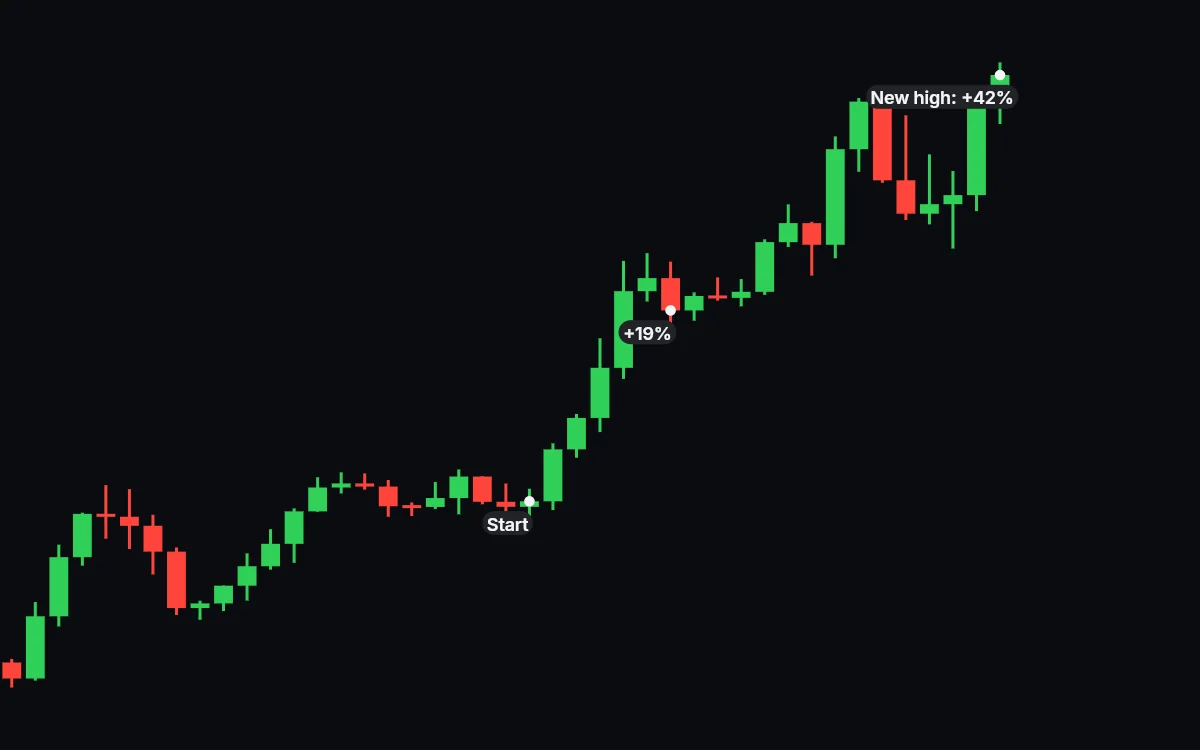
At the new high the lesson zooms in until only the last candles are left. It asks whether you would buy if that were the whole chart.
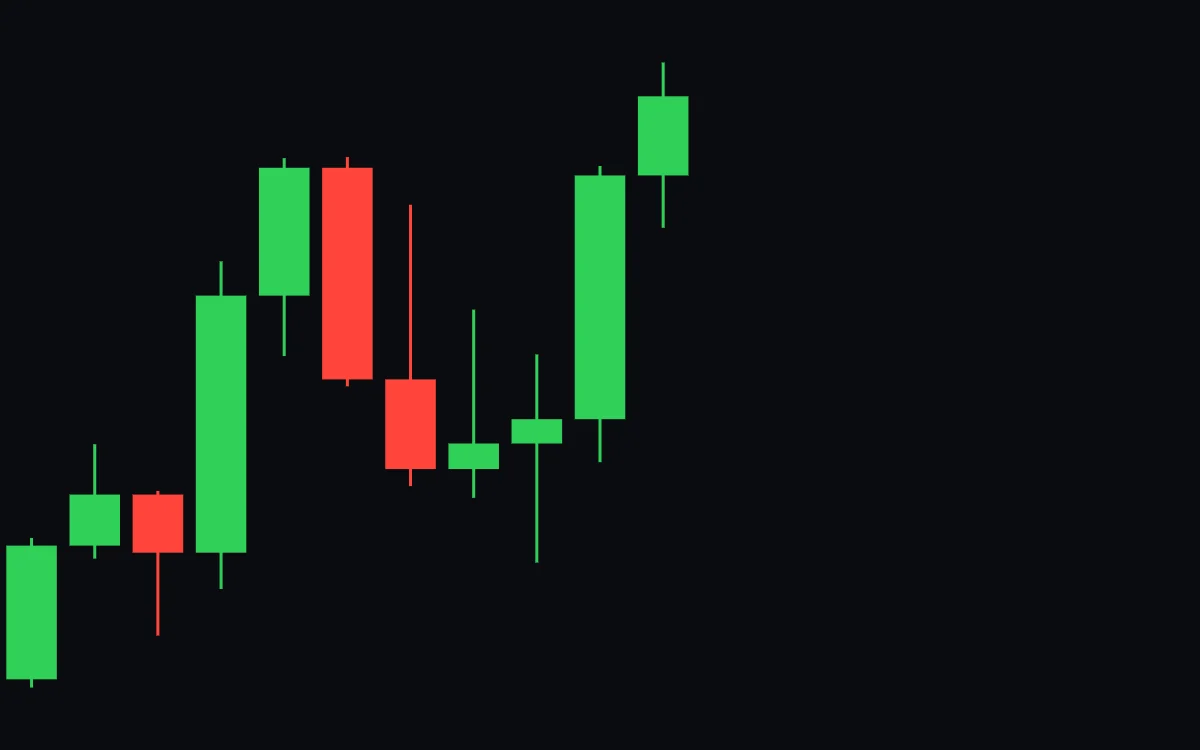
Then it zooms back out, and the same candles sit at the end of a 42% run.
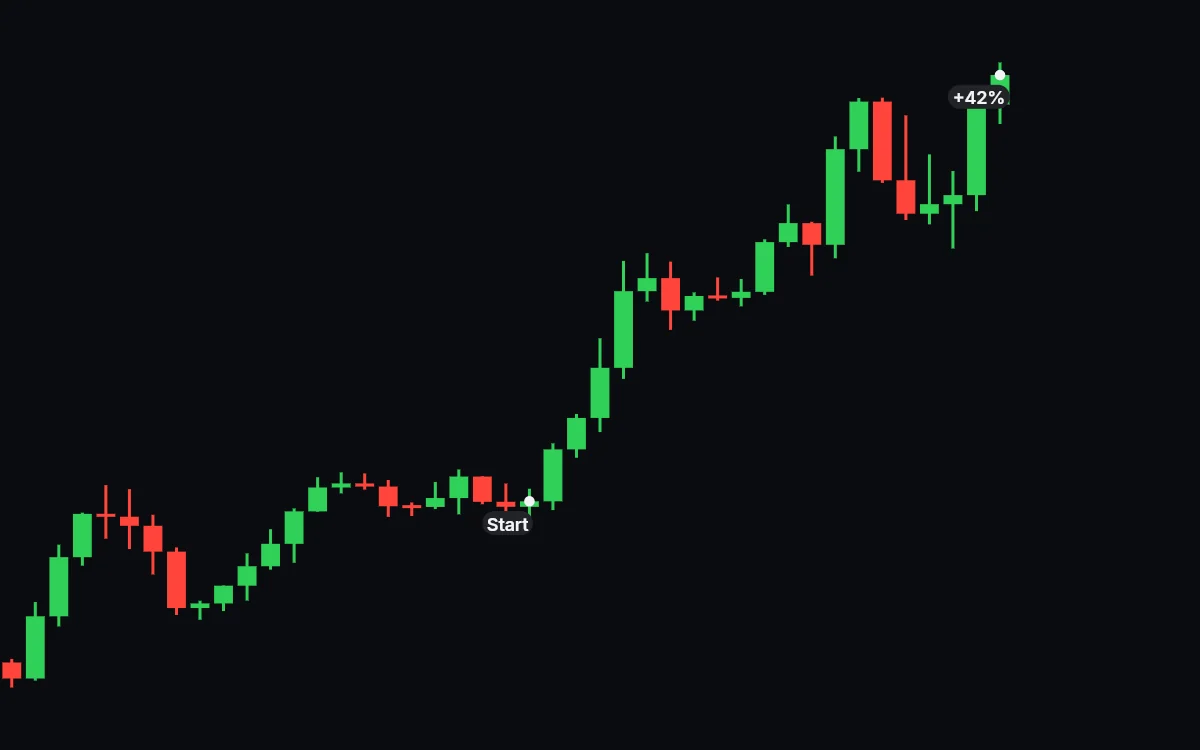
If you wanted to buy up there, the urge came from the run. The last few candles alone say little.
From the top, price fell 22%. With $10,000 bought at the top, you would be down $2,200.
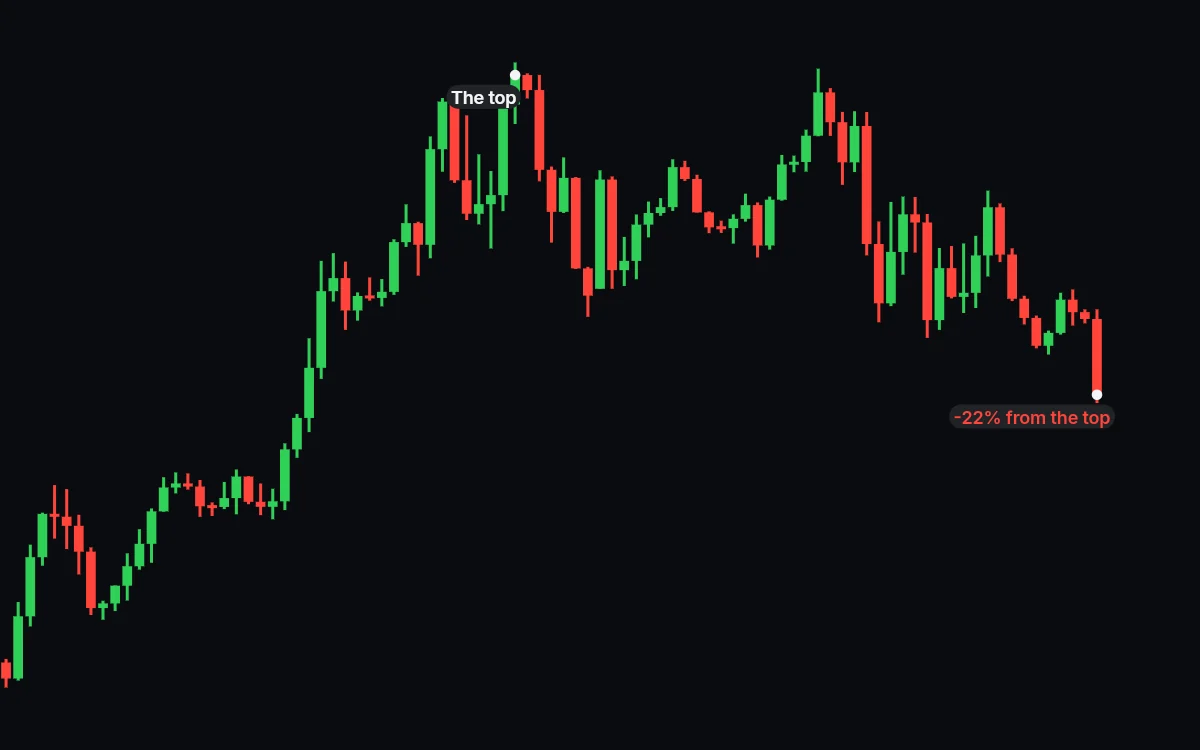
On another chart the run keeps going and buying late works out fine. At the time, there was no way to tell which chart this was.
Why does a big run make people want to buy?
A big run grabs attention, and attention drives buying. Brad Barber and Terrance Odean found that "individual investors are net buyers of attention-grabbing stocks, e.g., stocks in the news, stocks experiencing high abnormal trading volume, and stocks with extreme one-day returns."
Their explanation is a search problem. There are thousands of stocks to choose from, so many investors only consider the ones that caught their attention first. The study is "All That Glitters" in the Review of Financial Studies (2008), with a summary in the research library.
A run also puts a number in your head: what you would have made by buying at the start.
What does buying late do to a trade?
It moves your entry up while the target stays where it was, so the same trade risks more to make less.
Say you plan to buy a breakout at $50.00, with a stop at $48.00 and a target at $56.00. You miss it, and the stock runs to $55.50 before you buy. The stop has to go under the nearest level that still means something, $53.00.
| Planned entry | Late entry | |
|---|---|---|
| Entry | $50.00 | $55.50 |
| Stop | $48.00 | $53.00 |
| Target | $56.00 | $56.00 |
| Risk per share | $2.00 | $2.50 |
| Reward per share | $6.00 | $0.50 |
| Risk to reward | 1:3 | 1:0.2 |
Same stock, same target. The late entry kept $0.50 of the $6.00 the plan had, and it risks more to get it.
At 1:0.2 the trade has to win more than 5 times in 6 to break even.
How do you stop FOMO trading?
Take the run out of the decision before you click.
Zoom in first. Would you buy the last few candles as a chart of their own?
Then price the trade. Write down the entry, stop and target, and check the risk to reward you have left.
Keep the setups you trade on a list written before the session. A stock that was not on it needs a reason beyond the move.
A price that already went up can still go higher, and the run alone says nothing about which way it goes next.
Key points
- FOMO in trading is the urge to buy because price already went up and you are not in it.
- Individual investors are net buyers of stocks in the news and stocks with extreme one-day returns (Barber and Odean, 2008).
- Buying late moves the entry and keeps the target, so the trade risks more to make less.
- Before buying a big move, ask whether you would buy the last few candles on their own.
Press Start above and watch the run. The other two psychology lessons cover holding a losing trade and revenge trading.